
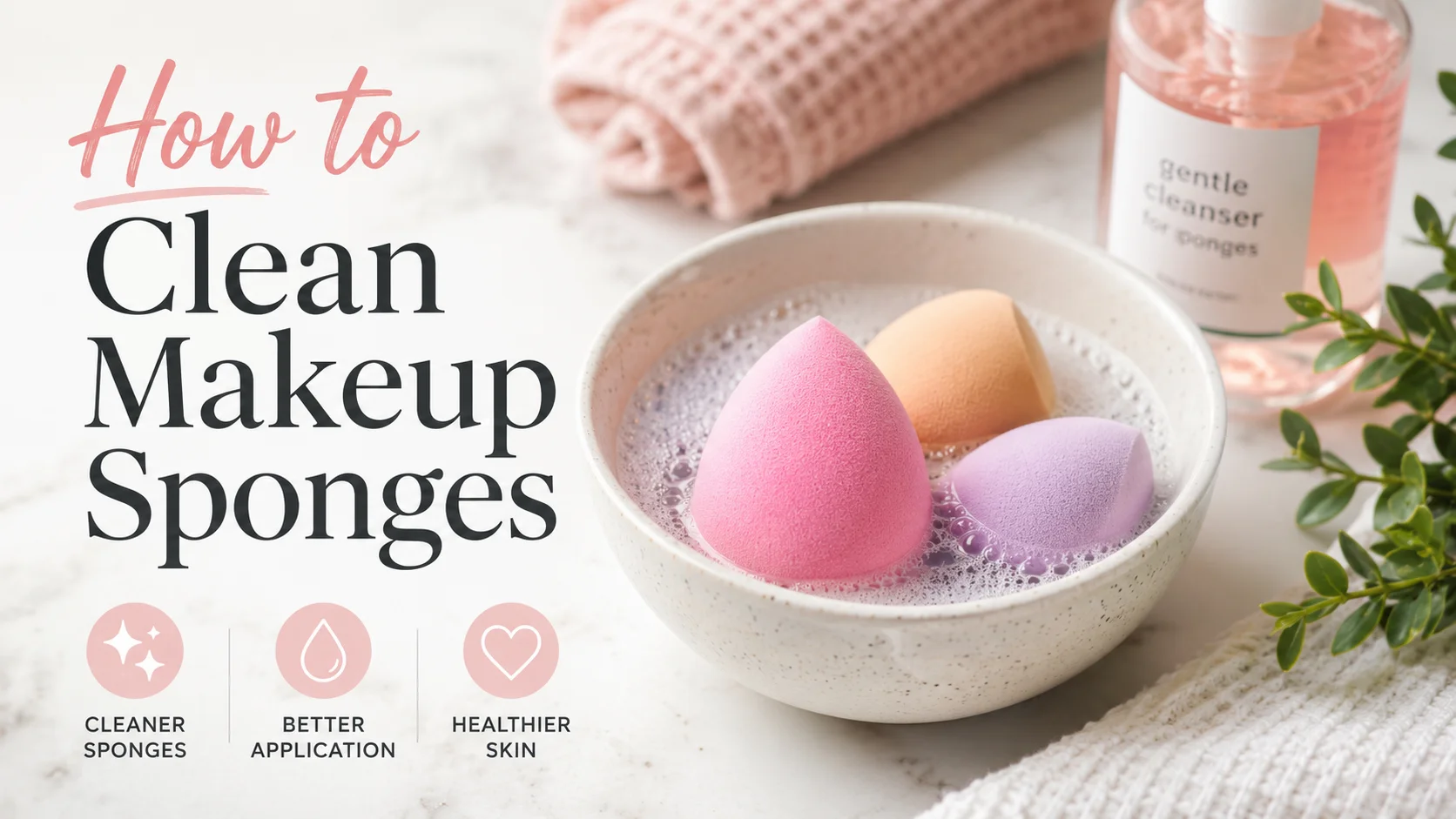
What Is the Best Way to Clean Makeup Sponges?
Learning how to clean makeup sponges is an essential part of any makeup routine because dirty sponges can quickly affect both your skin and your makeup finish. Over time, sponges absorb foundation, concealer, powders, and cream products, which can lead to bacteria buildup if they are not cleaned regularly.
A clean sponge helps you achieve smoother blending, more even coverage, and healthier skin. How to clean makeup sponges properly is important if you want clear skin and smooth foundation application. If you like a polished finish, you can also explore our Soft Glam Makeup guide.
Why You Should Clean Makeup Sponges Regularly
Cleaning your sponge often makes a noticeable difference in your routine.
Here’s why it matters:
- Prevents acne and skin irritation
- Improves foundation blending
- Removes old product buildup
- Keeps sponge soft and usable
- Extends sponge lifespan
If you use your sponge daily, it’s best to clean it every 2–3 uses and deep clean it weekly.
Method 1: Soap and Warm Water Cleaning
This is the most effective and beginner-friendly method for how to clean makeup sponges.
Steps:
- Wet the sponge under warm water until fully soaked
- Apply a small amount of gentle soap or baby shampoo
- Gently squeeze and massage the sponge
- Watch makeup residue release into the water
- Repeat until the water runs clear
- Rinse thoroughly to remove all soap
This method works well for daily cleaning and removes most foundation stains easily.
Method 2: Micellar Water Method
Micellar water is great for breaking down stubborn makeup buildup inside the sponge.
Steps:
- Pour micellar water into a small bowl
- Soak the sponge for a few minutes
- Gently squeeze to release makeup
- Rinse with warm water
- Repeat if necessary
This method is especially useful for long-wear or waterproof foundation.
Method 3: Deep Microwave Cleaning Method
This method is effective for deep sanitization, but it must be done carefully.
Steps:
- Fill a microwave-safe bowl with warm water and soap
- Fully submerge the sponge
- Microwave for 30–60 seconds
- Let it cool completely before touching
- Rinse thoroughly after cooling
This method helps kill bacteria deep inside the sponge, making it feel almost brand new again.
Best Products for Cleaning Makeup Sponges
To make cleaning easier, you can use:
- Baby shampoo
- Gentle liquid soap
- Antibacterial hand wash
- Dedicated sponge cleansers
- Mild facial cleansers
Avoid harsh detergents because they can damage the sponge texture and make it rough over time.
Common Mistakes to Avoid
Many people unknowingly damage their sponges while cleaning them.
Avoid these mistakes:
- Using boiling hot water (can damage sponge structure)
- Not rinsing properly (leaves soap residue)
- Scrubbing too harshly
- Storing damp sponges in closed containers
- Waiting too long between washes
These mistakes can shorten the lifespan of your sponge and affect makeup application.
How Often Should You Clean Makeup Sponges?
The cleaning frequency depends on usage:
- Daily users → clean every 2–3 uses
- Light users → clean at least once a week
- Heavy makeup users → quick rinse after every use
Deep cleaning once a week helps maintain hygiene and performance.
How to Dry Makeup Sponges Properly
Drying is just as important as cleaning.
Best practices:
- Squeeze out excess water gently
- Leave in an open, airy space
- Avoid closed drawers or makeup bags
- Do not use while damp
A fully dry sponge prevents bacteria growth and keeps texture intact. Learning how to clean makeup sponges correctly helps improve hygiene, makeup blending, and sponge lifespan.
Final Thoughts
Knowing how to clean makeup sponges is a simple but powerful habit that improves both your makeup and your skin health. A clean sponge ensures smoother application, better blending, and a more flawless finish. Allure also highlights regular cleansing of makeup tools as a key skincare habit.
By following regular cleaning methods and avoiding common mistakes, you can extend the life of your sponge and maintain a more hygienic beauty routine.